 Image 1 of 1
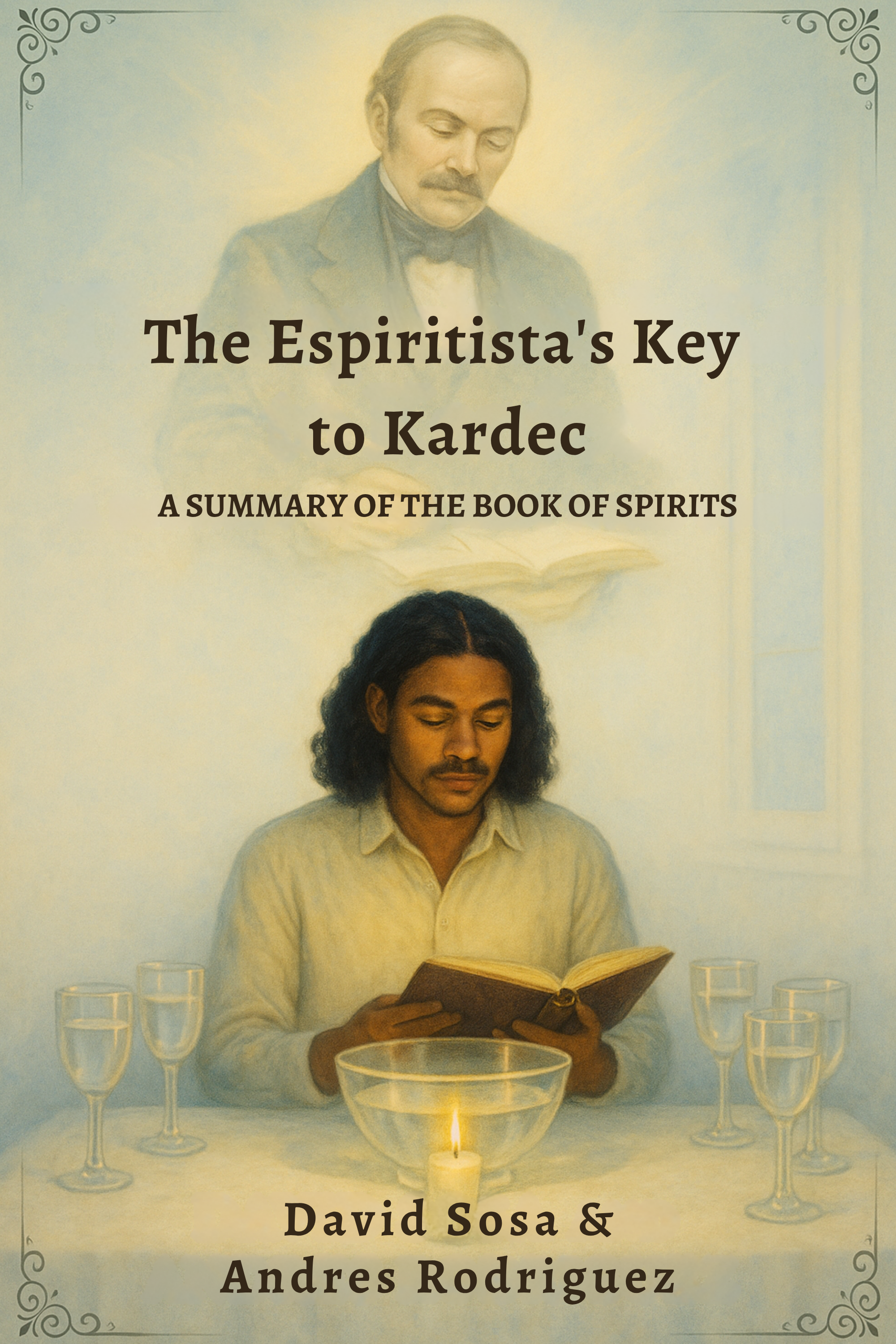
This book is a contemporary, plain-language interpretation of Spiritist teaching for both newcomers and experienced Espiritistas. It keeps Afro-Latin readers at the center by speaking clearly about daily ethics, community care, and dignity, while welcoming diverse ways of honoring the Divine. Rather than translating Kardec line by line, it restates the core ideas for modern life: God as the just first cause, spirits created to progress, moral law as the guide, and freedom joined to responsibility.
Book One lays the groundwork: God, creation, the vital principle, and why spirit and matter interact. Book Two explains the spirit world, incarnation, emancipation of the soul in sleep and trance, the return to spirit life, the influence of spirits, and how to discern their character by tone, coherence, and results. Book Three turns doctrine into conduct. It unpacks the divine law through adoration, labor, reproduction, preservation, destruction, society, progress, equality, liberty, and the united laws of justice, love, and charity, ending with a practical path to moral growth. Book Four treats future joys and sorrows, and how repentance, expiation, and reparation heal faults without despair or fatalism.
The closing chapter presents Spiritism as a universal religion measured by conduct, not labels: truthful speech, fair work, protection of the vulnerable, and service to neighbors. Throughout, the book honors Afro-Latin experience by focusing on clarity, consent, sobriety, and community uplift, so readers can live these principles inside their own traditions with confidence and respect.
This book is a contemporary, plain-language interpretation of Spiritist teaching for both newcomers and experienced Espiritistas. It keeps Afro-Latin readers at the center by speaking clearly about daily ethics, community care, and dignity, while welcoming diverse ways of honoring the Divine. Rather than translating Kardec line by line, it restates the core ideas for modern life: God as the just first cause, spirits created to progress, moral law as the guide, and freedom joined to responsibility.
Book One lays the groundwork: God, creation, the vital principle, and why spirit and matter interact. Book Two explains the spirit world, incarnation, emancipation of the soul in sleep and trance, the return to spirit life, the influence of spirits, and how to discern their character by tone, coherence, and results. Book Three turns doctrine into conduct. It unpacks the divine law through adoration, labor, reproduction, preservation, destruction, society, progress, equality, liberty, and the united laws of justice, love, and charity, ending with a practical path to moral growth. Book Four treats future joys and sorrows, and how repentance, expiation, and reparation heal faults without despair or fatalism.
The closing chapter presents Spiritism as a universal religion measured by conduct, not labels: truthful speech, fair work, protection of the vulnerable, and service to neighbors. Throughout, the book honors Afro-Latin experience by focusing on clarity, consent, sobriety, and community uplift, so readers can live these principles inside their own traditions with confidence and respect.