Spiritual
Spiritual
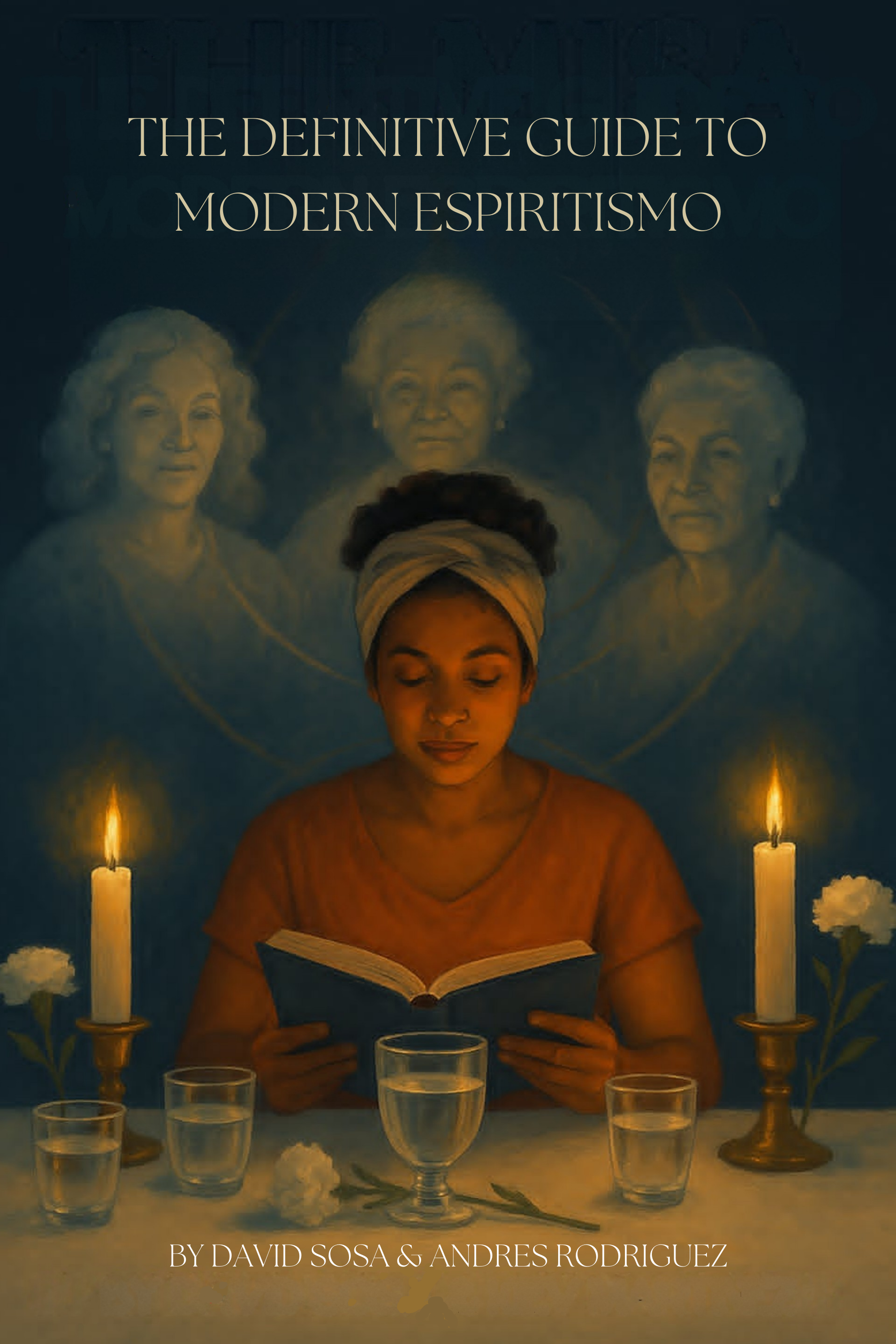
The Definitive Guide to Modern Espiritismo
Journey through the living tradition of Espiritismo. This book gives you both the story and the structure: where it came from and how to make it work today.
Inside you'll find:
A clear history: from early Spiritism, through Kardec’s influence, to Afro-Caribbean practices and modern diasporic forms.
Foundational principles: how a clean mesa, water-only vessels, candles, and prayer create a stable spiritual field.
Practical tools: how to run a misa start-to-finish, apply evidential discipline, elevate guides and ancestors, and manage household practice.
Guidance for learners: how to develop mediumship in a way that minimizes error and maximizes clarity.
A path for home life: routines for the guide, the boveda, decision-making, and handling disturbances with order.
This is not theory cloaked as ritual. It’s a hands-on guide meant to help you build stability, accountability, and clarity in spiritual work. Whether you’re beginning or building a house, you’ll find structure, insight, and practice.
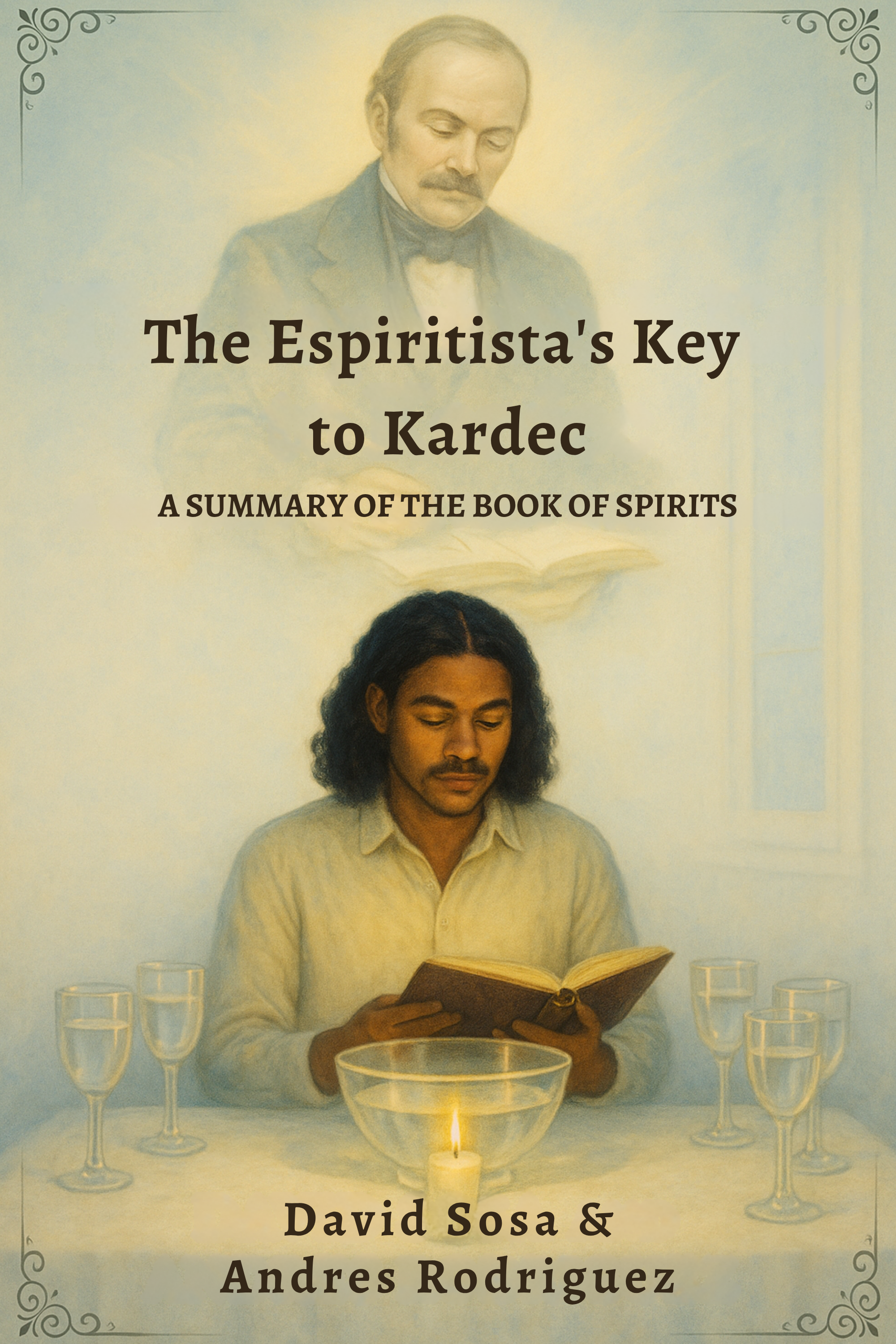
This book is a contemporary, plain-language interpretation of Spiritist teaching for both newcomers and experienced Espiritistas. It keeps Afro-Latin readers at the center by speaking clearly about daily ethics, community care, and dignity, while welcoming diverse ways of honoring the Divine. Rather than translating Kardec line by line, it restates the core ideas for modern life: God as the just first cause, spirits created to progress, moral law as the guide, and freedom joined to responsibility.
Book One lays the groundwork: God, creation, the vital principle, and why spirit and matter interact. Book Two explains the spirit world, incarnation, emancipation of the soul in sleep and trance, the return to spirit life, the influence of spirits, and how to discern their character by tone, coherence, and results. Book Three turns doctrine into conduct. It unpacks the divine law through adoration, labor, reproduction, preservation, destruction, society, progress, equality, liberty, and the united laws of justice, love, and charity, ending with a practical path to moral growth. Book Four treats future joys and sorrows, and how repentance, expiation, and reparation heal faults without despair or fatalism.
The closing chapter presents Spiritism as a universal religion measured by conduct, not labels: truthful speech, fair work, protection of the vulnerable, and service to neighbors. Throughout, the book honors Afro-Latin experience by focusing on clarity, consent, sobriety, and community uplift, so readers can live these principles inside their own traditions with confidence and respect.

The Espiritista’s Key to Kardec, Part Two: The Book of Mediums is a clear, modern companion for readers who want to study Allan Kardec’s practice manual without getting lost in nineteenth-century language or séance folklore. This volume walks you through Kardec’s aims, his method, and the practical guardrails he set for safe and serious work. It explains core ideas in plain English, shows how Kardec organized his research, and highlights the habits that help circles stay focused and honest. You will find careful guidance on discernment, common pitfalls, and the mindset that invites thoughtful communication rather than spectacle.
Written for students, working mediums, and study groups, this book keeps the spirit of Kardec’s project intact while making it accessible today. It avoids sensationalism and keeps its attention on purpose, ethics, and method. Along the way it gives you historical context for Kardec’s choices, shows how later Spiritist practice drew from them, and offers prompts that help you turn reading into disciplined study. If you want a reliable guide that respects both reason and faith, this key will help you unlock Kardec’s most practical work.
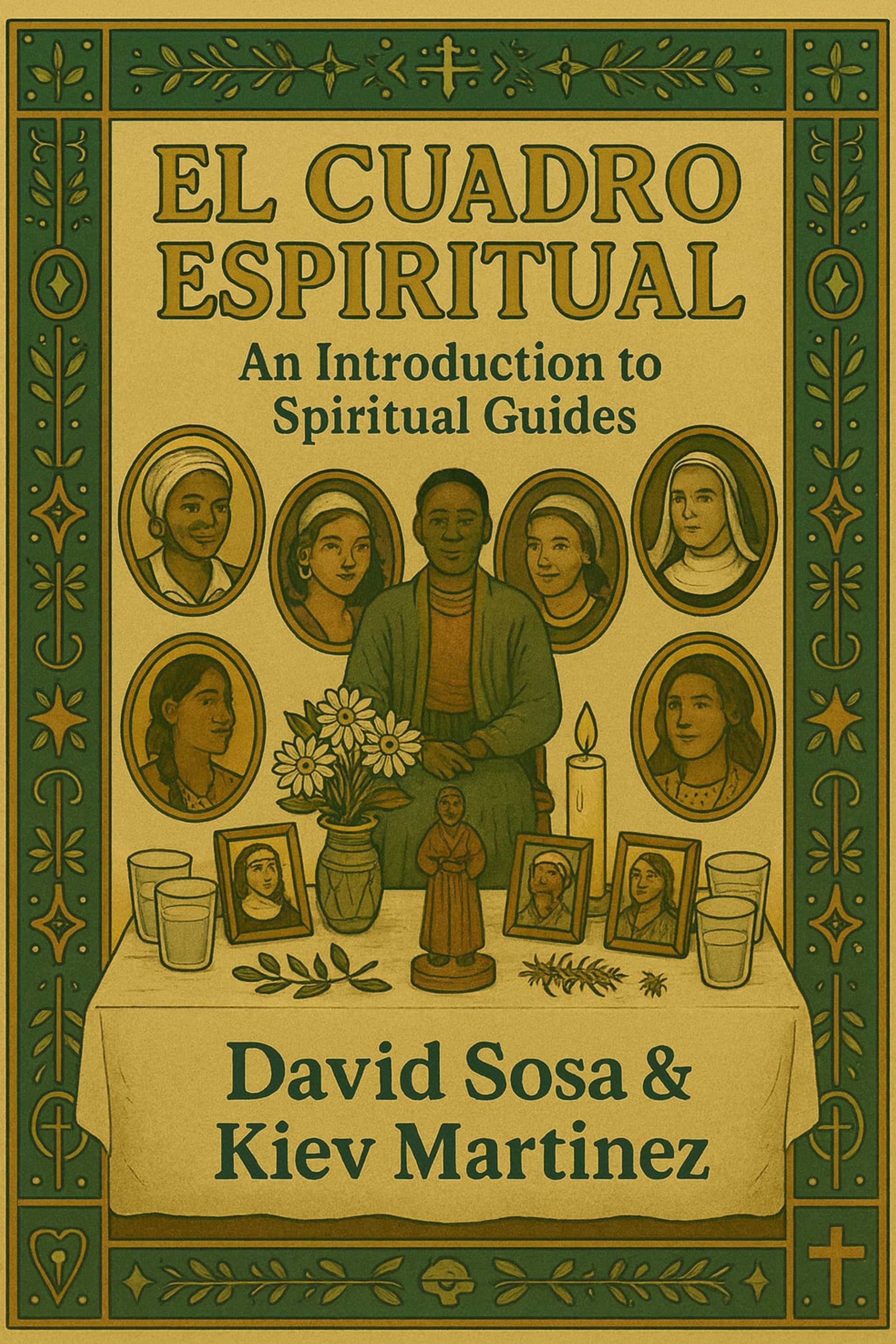
El Cuadro Espiritual is a practical guide to the spiritual court in Espiritismo. Centering the Guía Central, it shows how evidence, identification, and elevation produce repeatable results. Learn the core gifts (clairvoyance, clairaudience, clairsentience, claircognizance, clairalience/clairgustance), tested forms of mediumship, clean session cadence, functional tools, and the main commissions. Build a court that works: clear roles, firm boundaries, proportioned petitions, and outcomes you can confirm.
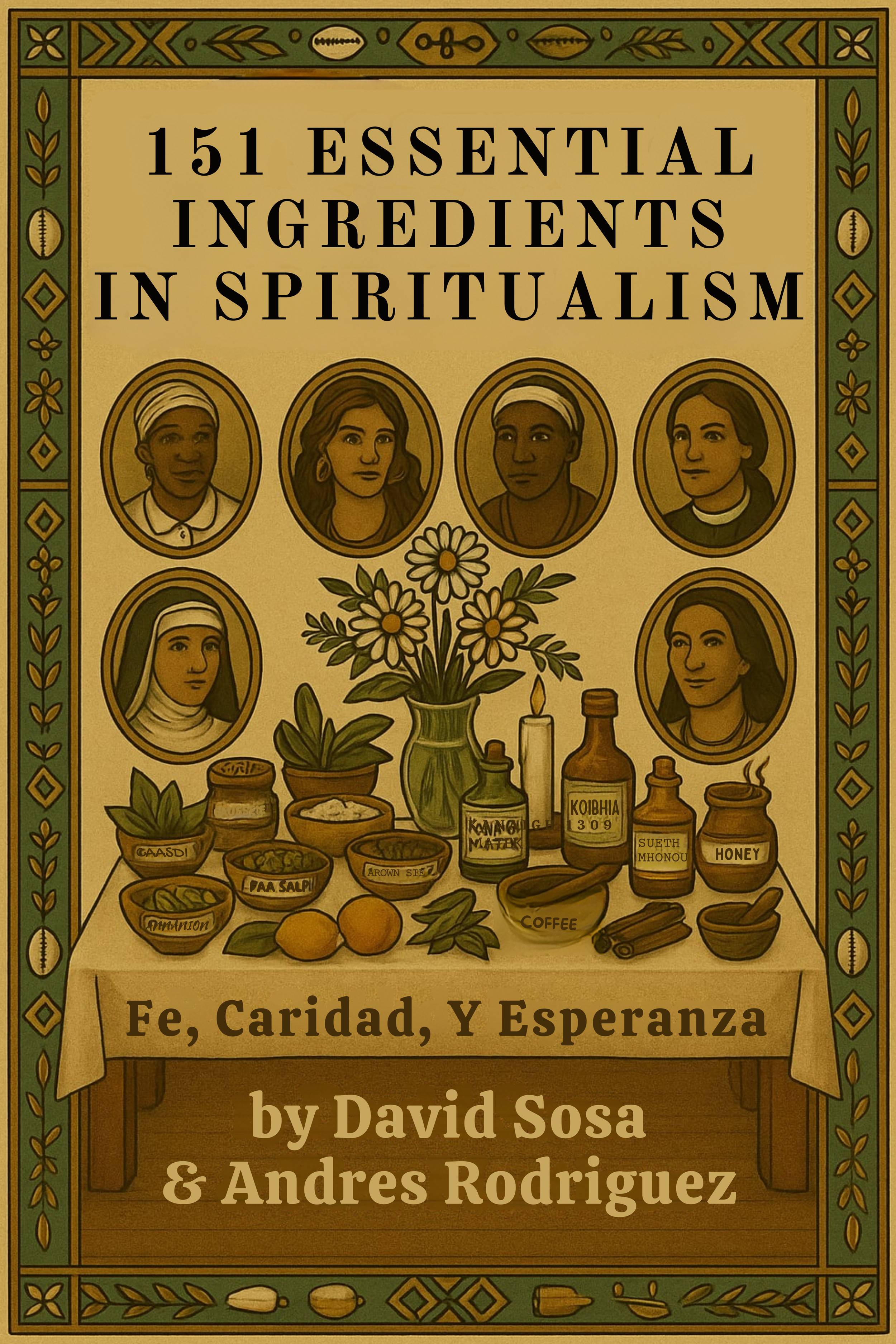
This book is a clear, field-tested reference to the 151 essential ingredients used in Afro-Latino Spiritualism. Organized for practical use, it covers perfumes, condition oils, resins and incense woods, herbs/roots/barks, powders and sachets, baths/washes/salts, candles and color logic, ritual hardware, and papers and sprays. Each entry outlines origins, typical preparation, safe handling and dosage, pairing rules, burn and disposal notes, and contraindications. The focus is procedural: how to stage a room, select the correct medium for a case, dress and place materials without creating hazards, and record outcomes that can be audited. The tone is rigorous and accessible, suitable for households, botanicas, and study circles that need reproducible methods rather than anecdotes.
Beyond the catalog, the book provides workflow maps from cleansing to opening, attraction, stabilization, and protection; templates for petitions and burn logs; guidance on consent and proportional response; and sourcing notes that address legality, conservation, and ingredient transparency. Regional practice across Puerto Rico, Cuba, the Dominican Republic, Venezuela, and diaspora communities is treated as operational detail, not ornament, with apartment-safe protocols and public-venue constraints addressed directly. The result is a dependable manual for new workers and experienced practitioners alike: precise steps, conservative dosing, safety checklists, bilingual shelf language, and tools for teaching and supervision that keep services effective, lawful, and respectful of shared spaces.
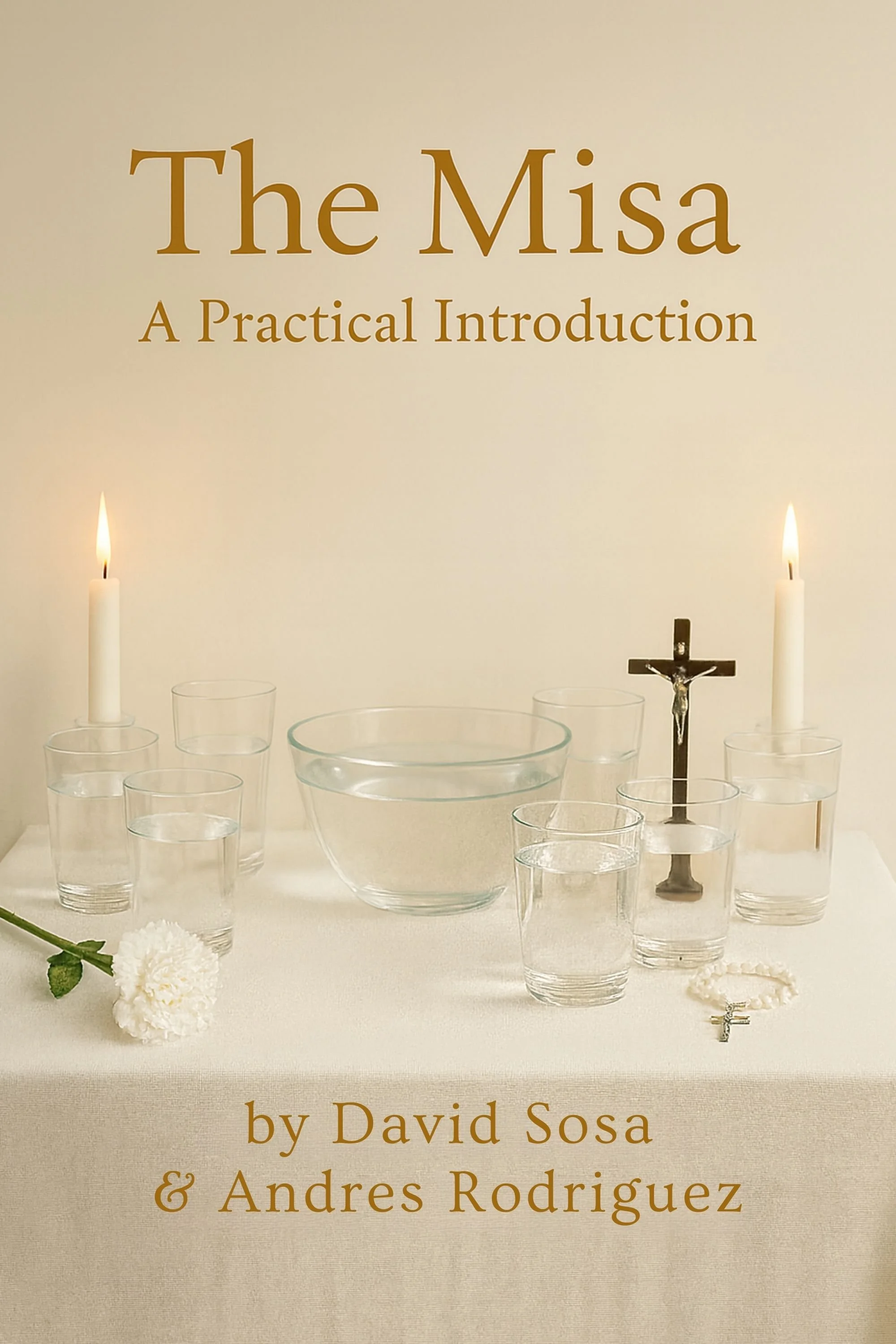
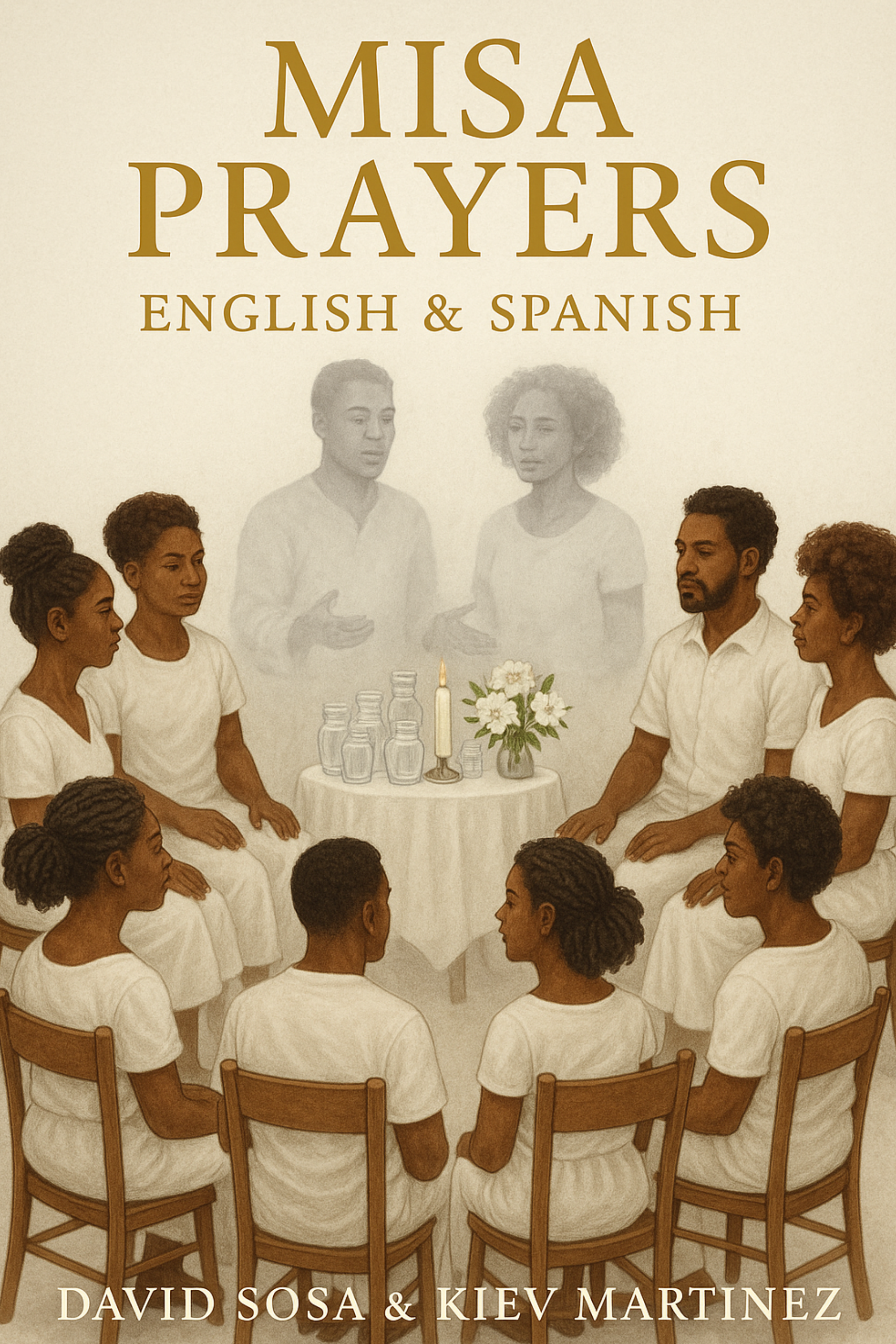
The Misa: A Practical Introduction is a clear guide to holding an ordered spiritual meeting that works with the dead for help and clarity. It explains what a misa is, why songs matter, how prayers flow, and how evidence is confirmed without confusion. Readers learn the setup of the table, the purpose of each glass, candle, crucifix, flower, and tool, and the role of every practitioner present. The book teaches the opening, the core sequence, and the closing, with plain definitions for terms used at the table. Safety, discernment, and ethics are spelled out so beginners and experienced workers can keep the work clean and useful.
The guide includes prayers, core songs, and practical notes on when and why to use them. It shows how to identify helpful spirits, how to dismiss troubled presences, and how to steady strong emotion without breaking order. Readers will find steps for investigation sittings, cleansing sittings, and progress sittings, plus guidance on development for mediums and support roles. A full glossary anchors the language so every instruction is easy to follow. This book gives practitioners a reliable foundation to start well and continue with confidence.

The Spiritual Book of St. Clare is a practical guide to working with St. Clare as a living spirit of light, clear thinking, and steady faith. It is written for spiritualists, devotees of the saints, and anyone who turns to St. Clare when the mind feels crowded and the heart feels restless.
Drawing from Espiritismo, Sanse, and Afro-Latin Catholic practice, this book shows St. Clare not only as a cloistered nun from history, but as a working spirit who still answers today. You will see how she is honored on the Mesas Blanca and bóvedas, how her light is called to clear confusion, and how she stands beside the spirits and ancestors who walk with you.
Inside you will find:
Plain guidance on who St. Clare is and how she works in the Caribbean and diaspora
How to build and maintain a simple, strong altar for St. Clare at home
Prayers, petitions, and ways to speak with her in your own words
Spiritual cleansings and workings for mental clarity, calm sleep, and firm decisions
Advice on how to read and respond to the signs and dreams she sends
The focus of this book is simple: help you stand in the light with St. Clare, think clearly, and move in peace. Whether you are new to her or have kept her image for years, this book gives you clear, respectful, and usable work so you can call on her with confidence and keep her close in daily life.

The Spiritual Book of St. Anthony is a working manual for people who call on St. Anthony as a real, active helper. It honors him as a Catholic saint and as a powerful road-opener in Espiritismo and related Caribbean and Latin American traditions.
This is not a book of vague stories. It is a step-by-step guide to building a clean, practical relationship with St. Anthony in the home and on the mesa.
Inside you will find:
A clear life story of St. Anthony of Padua and how he became known as a miracle worker
How he is understood in Espiritismo, Sanse, and folk practice as a gate-opener who stands with the spirits that open the way
How to set up and care for his altar at home, with detailed notes on images, colors, offerings, and special days
Traditional prayers, novenas, and psalms, along with new prayers for modern needs
Candle works, petitions, and spiritual baths for finding lost things, opening paths, steady work, court and legal matters, love, protection, and family peace
Guidance on how to ask for what you need without begging in fear, and how to back your petitions with action, order, and gratitude
Ways to work with St. Anthony in harmony with your ancestors and guiding spirits while still respecting what must stay inside the house
The Spiritual Book of St. Anthony is meant to live on your altar and your work table. Use it as a reference when you prepare offerings, light candles, or are ready to ask for help in a serious way. It supports devotees, espiritistas, rootworkers, and students who feel drawn to St. Anthony and want clear, practical direction instead of superstition or guesswork.
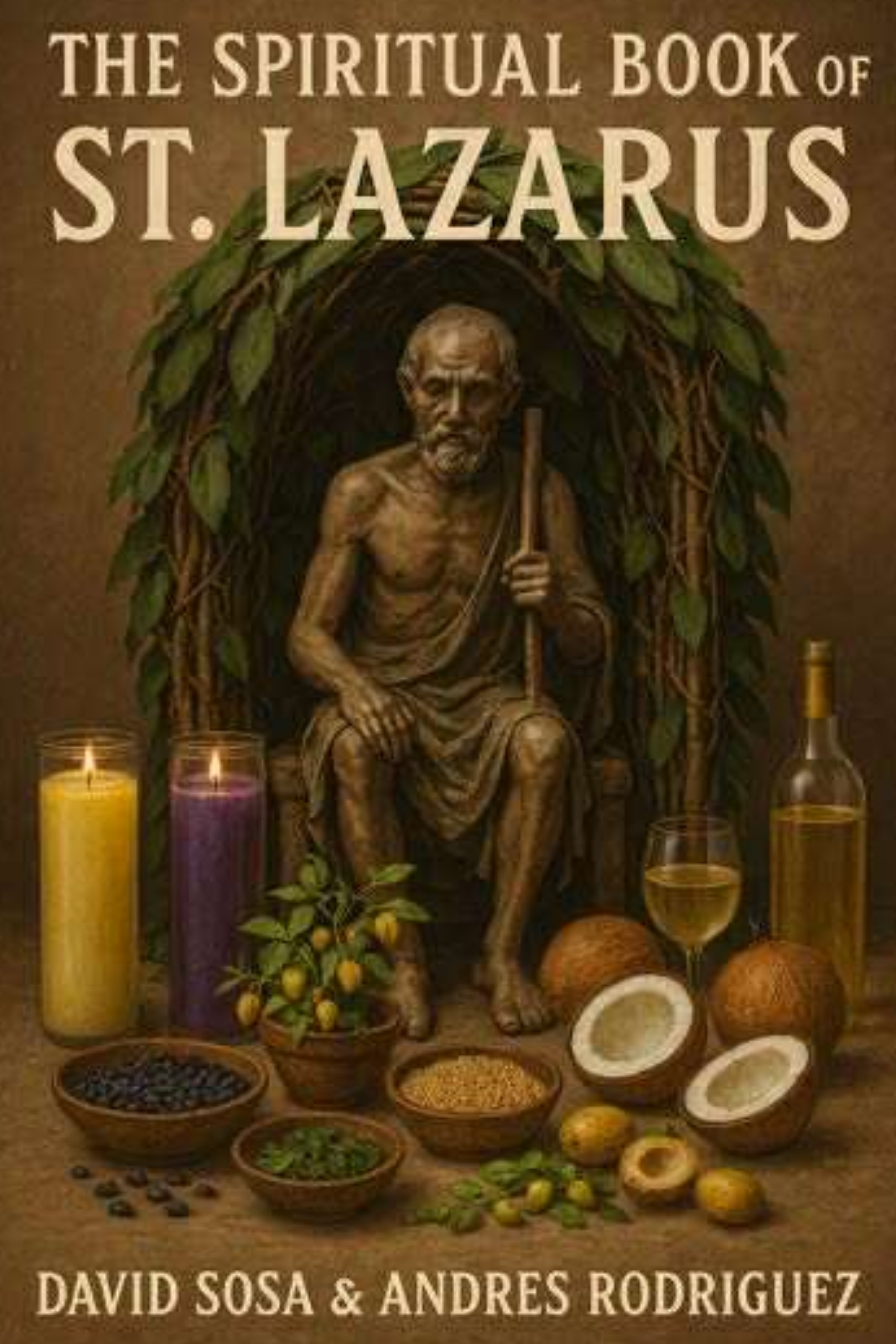
The Spiritual Book of St. Lazarus is a guide to working with one of the most powerful healers in the spirit world. In the Caribbean and across the Americas, St. Lazarus stands beside the sick, the poor, and all who walk with pain and still keep going. This book shows you how to approach him with respect, honesty, and clear requests for help.
The book also looks at how St. Lazarus is honored in Espiritismo and Afro-Caribbean practice, including his close link to Babalu-Ayé, spirit of sickness and healing. It explains how to read signs, give thanks, and build a long-term relationship with him, not just ask in moments of crisis.
Inside you will find prayers, offerings, and simple works for health of body, mind, and spirit. There are instructions for setting up an altar, making promises, and keeping them. You will learn ways to ask for relief from illness, to support loved ones who are suffering, and to find strength when you feel you cannot take one more step.
Written in clear, direct language, this book is meant for beginners and experienced workers alike: devotees, espiritistas, rootworkers, and anyone who feels called to walk with St. Lazarus. If you are seeking mercy, healing, and steady help on a hard road, this book will show you how to stand before him and ask.

This book is a clear, field-tested manual for building, maintaining, and working a Bóveda - the anchor tool of Espiritismo. It begins with plain answers: what a Bóveda is, where it comes from, and why water, glass, light, and disciplined prayer remain its core. You’ll learn how a single glass of water grew into today’s layouts and how to set, open, read, and close the table with confidence.
You get step-by-step instructions for your first setup, daily cadence, and safe service. The text covers personal bóvedas, working tables with seven or nine glasses, misa layouts, investigation settings, and nine-day elevation cycles. Prayers are provided in both traditional and nonsectarian forms, including calls to ancestors and closing formulas. Guidance on Florida Water and incense use keeps the work clean and readable.
History and context are presented without jargon: Kardec’s codification, the rise of Spiritualism, Caribbean developments, and the interface with Lucumí and Congo rites - what overlaps, what does not, and why boundaries matter. A full chapter on spiritual gifts explains the clairs, automatic writing, trance speech, and scrying, followed by straight talk on spiritual discernment so you can tell preference from guidance and recognize the tone of known guides.
Whether you are starting your first table or refining a long-standing practice, this book gives you a reliable standard: simple tools, steady routines, sober language, and results that show up in real life. Keep it on the table; use it in service.

El Caldero Espiritual: An Introduction to Spiritual Pots is a clear, practical guide to how containers are used in Espiritismo to seat and direct sacred action. Grounded in Afro-Atlantic history and Caribbean practice, it defines the spiritual pot on its own terms and distinguishes it from a Palo prenda without blurring lineages. The book traces origins in Dahomey/Fon and Yorùbá vessel work, follows development in Cuba and Puerto Rico, and shows how pots took shape beside the mesa blanca. It maps the main types with precision—ancestral seats tied to a gifted elder, guide-centered vessels for Congo, Madama, Gitana, Bruja, and Doctor spirits, and mission-focused builds with clean endings. It also covers standard bodies such as the caldero and the cazuela, and expands to other forms some spirits choose, including bowls, shells, chests, cages, and bone seats under proper signs.
Readers learn the working logic behind elements, minerals, plants, metals, soils, sticks, and waters so choices fit the case instead of fashion. The text explains the heart or matari concept, community-oriented service, regional currents (mesa blanca, cruzado, científico), and the role of the cuadro espiritual with a stable main guide. It outlines disciplined preparation, consent, and pacing; communication by prayer; and brief confirmation using four prepared coconut pieces or an alternate.Showcase what this product is about. What’s it made of? How was it made? What are ways to enjoy it?